Last week saw our first short film shoot. Our remit was a two minute film based around the theme of 'Home'. To begin with, we met a number of times to brainstorm ideas eventually settling on a sequence of shots and connecting scenarios with a voice-over which illustrated how different people felt about home - what home meant to them? Where they felt most at home?
The first sequence we shot was a ballet dancer - filmed in the RSAMD concert hall - this was pivitol to the rest of the filming as it allowed almost everyone to work together and get to know the kit properly in a time-pressured environment. After much stress and hassle - we managed to get the shot we needed.
The next piece of filming took place in the RSAMD student halls. This was probably the most stressful time of the entire experience. Not only was the time restrictive, but the space was small and cramped - some of the equipment was not working as we wanted, there was a complicated green shot necissary and to top it all off - the fire alarm went off mid-shot, triggering the fastest de-rig any film set has ever seen. However, again, we managed to get the sequence we required.
Thursday began with a very early start and a jolly trip to a very wet and cloudy Loch Lomond. I had recruited almost my entire family for this shoot - from sisters to grandparents to dogs. However, contrary to the previous night's shoot - this day went very smoothly - no technical or time issues - we got all the shots needed and were packed and away for 3:30 - a success!
We will need to wait and see how the edit turns out but if nothing else - then this was a good and collaborative experience for most involved.
Monday, 22 March 2010

Saturday, 6 March 2010
King Kong 1933

"Oh no, it wasn't the airplanes. It was beauty killed the beast."
This universally known quote is instantly recognisable and is synonymous with the world's biggest movie star, the terrifying yet compassionate fifty foot ape, Kong.
When it was announced that we would be watching 'King Kong' as our Friday screening, I was really pleased - I had seen the Peter Jackson remake and had enjoyed it - and having watched the majority of the bonus features, I knew that the original version, made in 1933 was Jackson's inspiration for his film. He had always loved the story and claimed that he did not wish to replace the original, but rather he wished to allow a modern audience to witness 'the 8th wonder of the world' in all its glory.
I as not disappointed - I thought it was a well constructed, well written and well acted piece and, although they look dated now, the use of stop-motion animation was ground-breaking for the time the film was released. I foudn myself totally distancing myself from what was evidently a two foot platasine monkey and getting totally emersed in the plot and the action on screen - I was even siginificantly repulsed as Kong, in a successful attempt to save Ann Darrow (played by Fay Wray), ripped open the jaw of a dinosaur and played with its carcus jsut ot make sure it was dead. I was not at all aware of how long the film was, perhaps because in comparison to Jackson's 201 minute epic it was a mere short, but I found myself at the end of the film, having not noticed the time pass. this is probably one of the first times this has happened in a while when watching a film for the first time - it was good, heart-stopping yet touching drama.
As an audience, we are given the opportunity to make up our own mind about Kong, his intentions and awareness - I cannot say how I would feel towards the character had I not been predisposed to the idea that Kong falls in love with Ann (through the 2005 version) - it is definitely up for discussion. This, I suppose is more realistic - whether we read into Kong's emotions or not - he is not going to come straight out and tell us!
I feel, it was most definitely, a worthwhile watch - a landmark film - as Andy said - "1933's Avatar".
Tuesday, 2 March 2010
Lighting Assessment
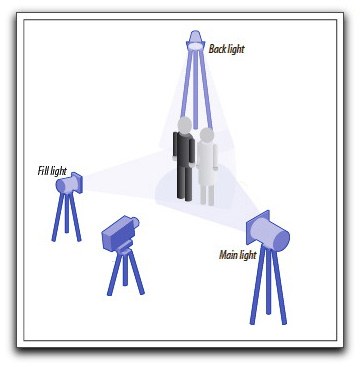
All in all, I felt the assessment went smoothly. There were just a few small mistakes I made:
Firstly was setting my back-focus: Although, apparently by a complete fluke, it was set okay – I did not open the iris fully while setting. I will make sure from now on to focus on the smaller details such as this.
Secondly, I finished earlier than expected, setting up the camera and lighting, and shooting the required shots, however I did not finish de-rigging the kit until the just before the end of the assessment – I will, from now on, focus on packing away the kit more efficiently, which, as Ray explained at my tutorial, will be advantageous when on set (to save valuable time).
I must admit, I expected the assessment to be a little more intense – more questioning – I was slightly daunted, worrying about being asked specific questions about colour temperature values etc however it did not come up. I understand the principals of this and I feel totally comfortable putting it into practice.
I don’t really have any more to say other than I am now fully comfortable with all that we have learnt in Ray’s class up until now.
Firstly was setting my back-focus: Although, apparently by a complete fluke, it was set okay – I did not open the iris fully while setting. I will make sure from now on to focus on the smaller details such as this.
Secondly, I finished earlier than expected, setting up the camera and lighting, and shooting the required shots, however I did not finish de-rigging the kit until the just before the end of the assessment – I will, from now on, focus on packing away the kit more efficiently, which, as Ray explained at my tutorial, will be advantageous when on set (to save valuable time).
I must admit, I expected the assessment to be a little more intense – more questioning – I was slightly daunted, worrying about being asked specific questions about colour temperature values etc however it did not come up. I understand the principals of this and I feel totally comfortable putting it into practice.
I don’t really have any more to say other than I am now fully comfortable with all that we have learnt in Ray’s class up until now.
Saturday, 20 February 2010
Television 'The Small Screen' module summary
I was already exceedingly passionate and interested in the art of filmmaking when I began the RSAMD’s Digital Film and Television course in September 2009 – and I do believe that if I had been asked back then if I knew much about television, my response would have been an unhesitant ‘yes’ – although I now know that this was not the case. As it turns out, I knew very little about the historical and current landscape of television – its programmes, the makers, the range of genres, styles, the structure and the many formats. There is so much more to television than most of us know. Our television module – ‘The Small Screen’ – has helped to open my eyes to the vast amount that television can offer – the BBC’s motto, to ‘inform, educate and entertain’. Informing us of news events and current affairs – educating us though documentaries teaching us about history and wildlife – entertaining us with powerful, emotional escapist drama, light entertainment shows and comedy.
Television affects all society and culture – and in some cases very much dictates both (e.g. pop-culture – the music we like, the clothes we wear, the food we eat). I have learnt of the power that television wields and we have had the chance to debate the pros and cons of this.
Throughout this module, led by film journalist and author, Andy Dougan, we have experienced all genres of television, from powerful drama like ‘The Street’ to light entertainment reality shows such as ‘Big Brother’, through screenings, lectures and passionate debates. It has helped us to contextualise our practical work – our screenwriting, camera and editing work – and by placing these skills in context, we can improve, for I believe to be good at these you must know why you are doing them, what you are creating and for whom.
I really look forward to further work in this class - exploring these ideas further, and I feel our first module has really helped to prepare us – placing us in the right mindset.
Television affects all society and culture – and in some cases very much dictates both (e.g. pop-culture – the music we like, the clothes we wear, the food we eat). I have learnt of the power that television wields and we have had the chance to debate the pros and cons of this.
Throughout this module, led by film journalist and author, Andy Dougan, we have experienced all genres of television, from powerful drama like ‘The Street’ to light entertainment reality shows such as ‘Big Brother’, through screenings, lectures and passionate debates. It has helped us to contextualise our practical work – our screenwriting, camera and editing work – and by placing these skills in context, we can improve, for I believe to be good at these you must know why you are doing them, what you are creating and for whom.
I really look forward to further work in this class - exploring these ideas further, and I feel our first module has really helped to prepare us – placing us in the right mindset.
Sunday, 14 February 2010
Desperate Housewives
 Okay, a tad embarrassing but now that it's out in the open, I feel I can continue.
My reason for watching this series was really one of pure coincidence. I believe it was a Wednesday morning, a few weeks ago. I was staying at my girlfriend's flat and she had already left for the academy early that morning so I thought I should spend my time constructively. I thought, a film and television student - I should watch a television programme however given that what was being broadcast at that point in time was mostly the likes of Jeremy Kyle, How Clean is Your House and A Place in the Sun - (programmes that, shall we say, are aimed at a particular niche market of which I am not a member) - I turned to the trusty DVD boxsets. The first thing that entered my line of vision was a show I had heard lots about but had never really watched - Desperate Housewives, series one. So I thought, 'why not, I'll try one episode' - this plan did not really come to fruition.
Desperate Housewives, the evidently highly addictive, Emmy Award winning show focusses on the women of Wisteria Lane and their struggles to cope with everything from murder to gardening - basically, American suburban life. Episode one of the first series opens with one of the central characters friends committing suicide - from this point on, she acts as narrator as the repercussions of this mystery start to unfold. The use of narration adds a creative, yet strangely creepy touch.
 The stars of the show all give great comedic performances - the writers playing on every character's stereotype - Susan, the klutz - Lynette, the over-worked mother - Bree, the uptight and clean-freak housewife and Gabrielle, the spoiled ex-model. The show uses both hilarious and heart-breaking storylines and as well as the truly likeable characters to keep the audience enthralled. And I think it's fair to say, there are more than a few outrageous moments and situations to keep you going. For example, in series one alone, we are presented with Bree's husband's S&M fetish, Lynette's addiction to her son's medication, a suicide, a strangulation, Gabrielle's affair with a minor and a hit and run - things are only getting more outrageous and complicated as the series progress and now with series six now being broadcast - I'm sure we can expect a whole lot more!
The show is both laugh out loud funny and exremely touching - an unusual choice for me but nonetheless(having completed 4 series boxsets in only a few weeks), I feel, a good one.
Saturday, 6 February 2010
A little time to reflect...
Here we are again - the end of another week and sitting down ready to document. Well, without further ado...
1st, 2nd & 3rd Feb
Monday - This chilly, bitter and overcast morning felt like the perfect welcome home to Richard - getting back to his roots, from L.A to Glasgae and from sun to sleet - I'm sure he was thrilled.
Anyway, he entered Room 1 on Monday morning to be met by 13 alert and eager faces, ready to learn how to write. I'm sure I speak on behalf of the class when I say that Richard has been truly missed and we were all very excited to have this intense block of screenwriting with him. We began with an outline of the plan for the next three days, one of which included a lesson set for Wednesday morning entitled, 'What we don't like about ourselves" - knowing from past experience (the post-secret lesson), the intensity of some of our screenwriting classes, a feeling of apprehension was shared by a few quick glances between ourselves.
The first two days we focussed on structure and character - doing exercises to demonstrate theory and looking at examples. I found that I got a far better understanding of how most film scripts are structured,and although I was less aware before, I can now see where this applies in the majority of films I watch.
I felt tired at the end of each day, the lessons are structured so that there is not one minute where you can sit back and just listen - it is a fully interactive experience, we are kept on our toes, constantly questioning ourselves and creating new ideas.
Wednesday morning finally arrived - we had been instructed the day before to bring in food and coffee to mellow this inevitably uncomfortable experience. However, I was surprised to find how easily and comfortably we all shared our answers to the question - Perhaps this is an indication of how close we have become as a class - we are able to share, without embarrassment or shame, some of our deepest feelings and worries without worries of judgement. I think this is a result of the kind of course this is that, although we have only known each other since last September, we feel more of a team than I did with anyone at school.
Wednesday afternoon consisted of individual tutorials with Richard to discuss the short film scripts we had written over the Christmas period. I found Richard's advice constructive and I feel I would approach the same story slightly differently now, having had this block of lessons.
4th Feb
On Thursday morning we had an interesting talk from John Yorke, the controller of Drama at the BBC. He took us through how television drama scripts are structured, comparisons between 3 and 5 act structures and the formulas behind writing successful tv drama. It was exciting to have someone so successful and high up in the business to talk to us - talking from real experience - this is one thing I like about the course - the chance to meet and make contacts with real, experienced industry professionals.
On Thurday afternoon we had our History of Cinema class with Andy where we talked about the editing styles of both Russian and German Expressionist cinema. Another interesting class full of info that helps us to contextualise our practical work.
5th Feb
On Friday morning we watched another, and my favourite so far, film from the silent era, and none other than the king of silent cinema, Charles Chaplin in City Lights. Made a few years after the invention of talkies (films with sounds), City Lights was a hilarious, yet sweet and touching film. It follows Chaplin's reoccurring character, the little tramp, as he falls in love with a blind girl and convinces her he is rich by befriending an alcoholic millionnaire. Another 'great' from Chaplin.
On Friday afternoon we had a group tutorial in the Fyfe to discuss our group task - the class has been split in two - one side arguing that television is part of the glue that hold our society together and the other arguing that television is nothing more than a box of lights and wires - I am a member of the latter. We discussed with Andy how we were planning on taking the research forward so that we can then form a presentation to pitch at next week's debate. I enjoy these interactive activities as it lets us share how passionately we feel about certain subjects and simultaneously learn from one other.
TO BE CONTINUED...
Tune in next week to hear another exciting adventure from DFTV1.
1st, 2nd & 3rd Feb
Monday - This chilly, bitter and overcast morning felt like the perfect welcome home to Richard - getting back to his roots, from L.A to Glasgae and from sun to sleet - I'm sure he was thrilled.
Anyway, he entered Room 1 on Monday morning to be met by 13 alert and eager faces, ready to learn how to write. I'm sure I speak on behalf of the class when I say that Richard has been truly missed and we were all very excited to have this intense block of screenwriting with him. We began with an outline of the plan for the next three days, one of which included a lesson set for Wednesday morning entitled, 'What we don't like about ourselves" - knowing from past experience (the post-secret lesson), the intensity of some of our screenwriting classes, a feeling of apprehension was shared by a few quick glances between ourselves.
The first two days we focussed on structure and character - doing exercises to demonstrate theory and looking at examples. I found that I got a far better understanding of how most film scripts are structured,and although I was less aware before, I can now see where this applies in the majority of films I watch.
I felt tired at the end of each day, the lessons are structured so that there is not one minute where you can sit back and just listen - it is a fully interactive experience, we are kept on our toes, constantly questioning ourselves and creating new ideas.
Wednesday morning finally arrived - we had been instructed the day before to bring in food and coffee to mellow this inevitably uncomfortable experience. However, I was surprised to find how easily and comfortably we all shared our answers to the question - Perhaps this is an indication of how close we have become as a class - we are able to share, without embarrassment or shame, some of our deepest feelings and worries without worries of judgement. I think this is a result of the kind of course this is that, although we have only known each other since last September, we feel more of a team than I did with anyone at school.
Wednesday afternoon consisted of individual tutorials with Richard to discuss the short film scripts we had written over the Christmas period. I found Richard's advice constructive and I feel I would approach the same story slightly differently now, having had this block of lessons.
4th Feb
On Thursday morning we had an interesting talk from John Yorke, the controller of Drama at the BBC. He took us through how television drama scripts are structured, comparisons between 3 and 5 act structures and the formulas behind writing successful tv drama. It was exciting to have someone so successful and high up in the business to talk to us - talking from real experience - this is one thing I like about the course - the chance to meet and make contacts with real, experienced industry professionals.
On Thurday afternoon we had our History of Cinema class with Andy where we talked about the editing styles of both Russian and German Expressionist cinema. Another interesting class full of info that helps us to contextualise our practical work.
5th Feb
On Friday morning we watched another, and my favourite so far, film from the silent era, and none other than the king of silent cinema, Charles Chaplin in City Lights. Made a few years after the invention of talkies (films with sounds), City Lights was a hilarious, yet sweet and touching film. It follows Chaplin's reoccurring character, the little tramp, as he falls in love with a blind girl and convinces her he is rich by befriending an alcoholic millionnaire. Another 'great' from Chaplin.
On Friday afternoon we had a group tutorial in the Fyfe to discuss our group task - the class has been split in two - one side arguing that television is part of the glue that hold our society together and the other arguing that television is nothing more than a box of lights and wires - I am a member of the latter. We discussed with Andy how we were planning on taking the research forward so that we can then form a presentation to pitch at next week's debate. I enjoy these interactive activities as it lets us share how passionately we feel about certain subjects and simultaneously learn from one other.
TO BE CONTINUED...
Tune in next week to hear another exciting adventure from DFTV1.
Monday, 1 February 2010
A Week's Worth of Reflection
25th & 26th Jan
The beginning of this week started slow as we had two days off from the Academy. Monday morning's class with Kim Millar had been cancelled (disappointingly I must say as I was really looking forward to continuing where we had left it the week before). I believe Gav and Ray had an industry event to attend so Tuesday's technical classes were also cancelled.
27th Jan
However there we all arrived, bright eyed and bushy tailed on Wednesday afternoon for Andy's class on television. Again we were in the boardroom (another exciting feature of Wednesday's classes), to watch and discuss the television broadcast that has recieved the most viewers ever for one single programme - the Morcambe and Wise Christmas Special 1970-something. Having never seen any Morcambe and Wise shows before, I found this very interesting, firstly to see what the hype around them was about and to see exactly why it recieved the most views of all time! I thought it was a nice mix of witty humour and good music (Elton John's star appearance).
28th Jan
Thursday marked a milestone in DFTV 1's filmography - our first shoot. This was a collaboration with the Technical & Production Arts course to execute a 3 camera shoot of a live gig. Our call time was originally 9 o'clock but was changed until 12. However , I came in at nine anyway to use the edit suites for a music promo I have been editing - I am finding the suites excellent to use - it's very nice to work in a professional environment with a pro set-up - I'm finding it helpful to have as much time as I need to get used to the set-up so that when we work on projects in the future I will be better prepared. I was given the role as camera assist on our shoot - this involved the set-up of one of the cameras - setting the viewfinder, monitor, back-focus, white balance, exposure etc. I believe this was beneficial as it allowed us to practically apply the skills we have learnt in class in a realistic situation.
29th Jan
On Friday morning - we had our usual screening - another silent film named Sunrise, I found myself totally emersed in the story, both the performances and the visuals were also stunning. Andy had told us about this near the beginning of the year and had told us how good it was so I was very pleased we were finally getting a chance to see it. The cinematography and use of moody lighting gave the film a strangely mysterious feel although the interaction between the two leads was both tense and touching in equal measure. It was essentially a very sweet film and, unlike in some of the other films of the silent era that we have seen, I was not aware of the absense of dialogue - the film was carried with effective subtle gestures and glances.
Anyway, that's all for that week - to be continued...
The beginning of this week started slow as we had two days off from the Academy. Monday morning's class with Kim Millar had been cancelled (disappointingly I must say as I was really looking forward to continuing where we had left it the week before). I believe Gav and Ray had an industry event to attend so Tuesday's technical classes were also cancelled.
27th Jan
However there we all arrived, bright eyed and bushy tailed on Wednesday afternoon for Andy's class on television. Again we were in the boardroom (another exciting feature of Wednesday's classes), to watch and discuss the television broadcast that has recieved the most viewers ever for one single programme - the Morcambe and Wise Christmas Special 1970-something. Having never seen any Morcambe and Wise shows before, I found this very interesting, firstly to see what the hype around them was about and to see exactly why it recieved the most views of all time! I thought it was a nice mix of witty humour and good music (Elton John's star appearance).
28th Jan
Thursday marked a milestone in DFTV 1's filmography - our first shoot. This was a collaboration with the Technical & Production Arts course to execute a 3 camera shoot of a live gig. Our call time was originally 9 o'clock but was changed until 12. However , I came in at nine anyway to use the edit suites for a music promo I have been editing - I am finding the suites excellent to use - it's very nice to work in a professional environment with a pro set-up - I'm finding it helpful to have as much time as I need to get used to the set-up so that when we work on projects in the future I will be better prepared. I was given the role as camera assist on our shoot - this involved the set-up of one of the cameras - setting the viewfinder, monitor, back-focus, white balance, exposure etc. I believe this was beneficial as it allowed us to practically apply the skills we have learnt in class in a realistic situation.
29th Jan
On Friday morning - we had our usual screening - another silent film named Sunrise, I found myself totally emersed in the story, both the performances and the visuals were also stunning. Andy had told us about this near the beginning of the year and had told us how good it was so I was very pleased we were finally getting a chance to see it. The cinematography and use of moody lighting gave the film a strangely mysterious feel although the interaction between the two leads was both tense and touching in equal measure. It was essentially a very sweet film and, unlike in some of the other films of the silent era that we have seen, I was not aware of the absense of dialogue - the film was carried with effective subtle gestures and glances.
Anyway, that's all for that week - to be continued...
Subscribe to:
Posts (Atom)